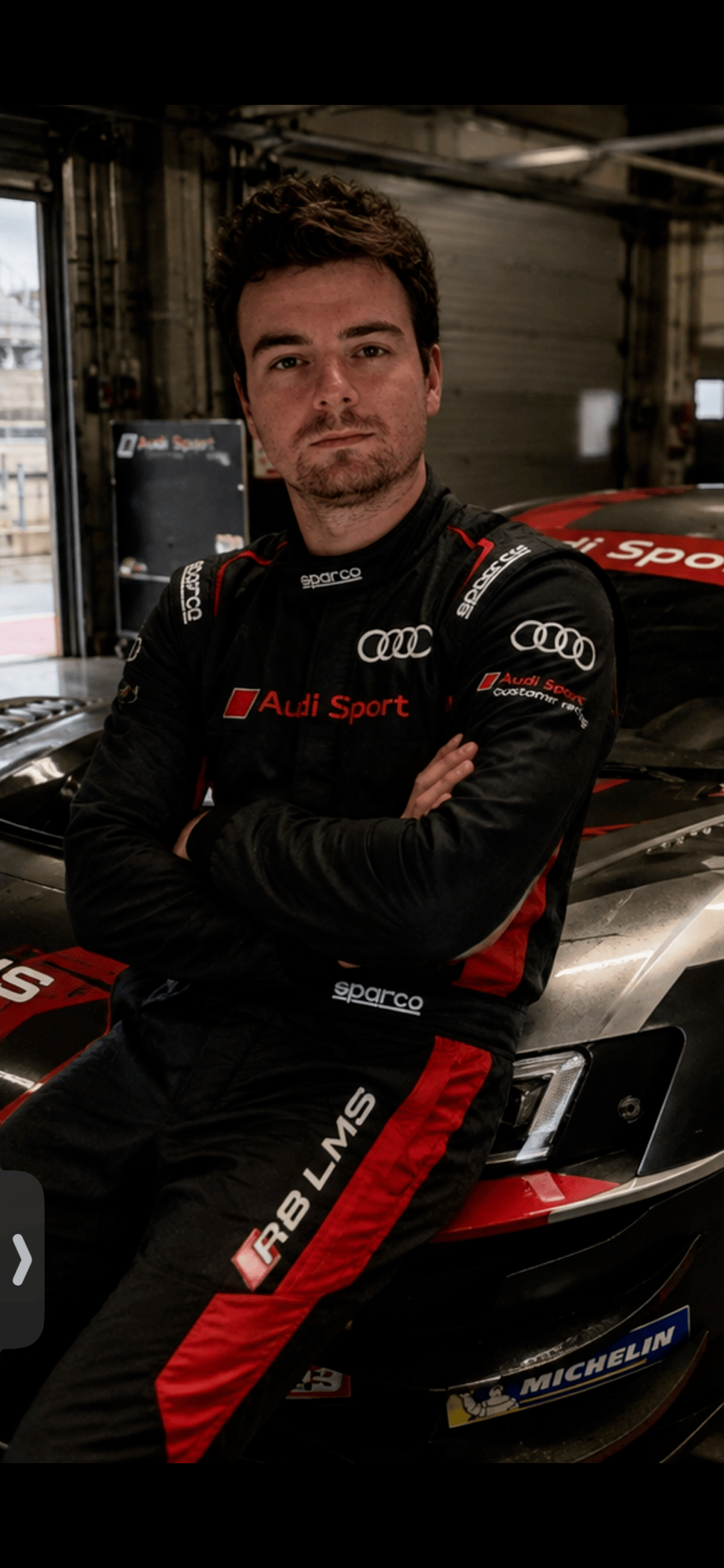
At CRGRT Esports, being fast is only the beginning.
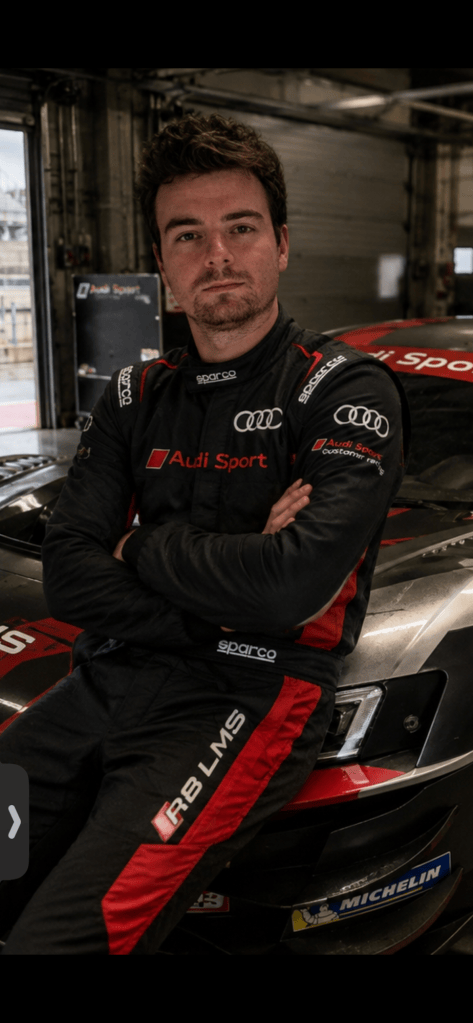
Our coaching programme is designed to help competitive drivers improve their pace, consistency, racecraft and car control, particularly when dealing with difficult or unstable machinery.
For drivers looking to develop within the CRGRT Esports division, Samuel Feinberg (SimRacingPenguin) serves as our main driver coach.
Within CRGRT, Samuel is regarded as a world-class Gran Turismo esports driver, recognised for his outright pace, car control and ability to extract performance from demanding cars.
His approach to coaching is straightforward:
Don’t just tell somebody to drive faster. Work out why they aren’t already faster.
Understanding the Driver
Every driver loses time differently.
One driver might brake too early.
Another might carry too much brake pressure into the corner.
Another might struggle with oversteer and compensate by driving too cautiously.
Some drivers are extremely quick over a single lap but inconsistent during races. Others are incredibly consistent but struggle to find the final few tenths in qualifying.
Effective coaching starts by identifying those individual weaknesses.
CRGRT coaching can focus on:
- Braking technique
- Trail braking and brake release
- Racing lines
- Corner entry
- Minimum corner speed
- Throttle application
- Weight transfer
- Car rotation
- Oversteer and understeer management
- Qualifying pace
- Race consistency
- Overtaking and defending
- Driving under pressure
- Adapting to different cars
- Driving with fewer assists
- Recovering from mistakes without losing control
The objective isn’t simply to produce a faster lap.
It’s to create a more capable driver.
Mastering Unstable Cars
One of Samuel’s key areas of coaching is controlling cars that don’t naturally make life easy for the driver.
Some cars remain relatively forgiving when pushed beyond their ideal operating window.
Others absolutely do not.
A demanding car might become unstable under braking, rotate aggressively on corner entry, develop sudden oversteer when weight transfers or punish an impatient throttle application.
For inexperienced drivers, the natural response is often to slow everything down.
Brake earlier.
Turn more cautiously.
Wait longer before applying the throttle.
That might keep the car on the circuit, but it can also destroy lap time.
Advanced car control is about learning how to operate close to that instability without allowing it to become uncontrollable.
Rotation Isn’t Something to Fear
A car moving underneath you isn’t necessarily a car that’s out of control.
At higher levels of competition, drivers often need to become comfortable with a degree of movement.
The important distinction is between controlled rotation and uncontrolled oversteer.
Samuel’s coaching helps drivers recognise that difference.
Instead of immediately panicking when the rear becomes light, drivers can learn to understand what caused the movement, anticipate it and make smaller corrections.
That develops confidence.
And confidence allows a driver to use more of the car’s available performance.
Weight Transfer and Car Control
A racing car is constantly transferring load.
Brake hard and weight moves forward.
Release the brake and the balance changes again.
Turn aggressively and the outside tyres become heavily loaded.
Apply the throttle and weight begins moving rearward.
Understanding those transitions is particularly important when driving unstable cars.
Small changes in brake release, steering input or throttle application can completely alter the balance of a car.
CRGRT coaching therefore goes beyond memorising braking markers.
We want drivers to understand what the car is doing underneath them and why it’s doing it.
Once a driver understands that, adapting to unfamiliar machinery becomes significantly easier.
Learning to Catch the Car
Losing the rear doesn’t necessarily have to end the race.
Drivers can develop their ability to recognise oversteer early and react before a slide becomes a spin.
That means developing sensitivity to visual movement, steering feedback and changes in the car’s attitude.
It also means learning that bigger corrections aren’t always better corrections.
Sometimes the difference between catching a slide and completely losing the car is simply reacting earlier and doing less.
This is particularly valuable when driving powerful, responsive or naturally nervous machinery.
Driving Without Depending on Assists
Driver aids can be useful, particularly while learning a new car.
But competitive drivers should also understand what happens when those systems are reduced.
Learning to control wheelspin, rotation and weight transfer yourself can expose weaknesses that electronic assistance previously disguised.
CRGRT coaching can therefore help drivers gradually develop greater independence from assists where appropriate.
The goal isn’t to remove assists simply for bragging rights.
The goal is to improve the driver’s underlying understanding and control of the car.
Adapting Between Cars
A genuinely capable esports driver shouldn’t require every car to behave the same way.
Front-engine, mid-engine and rear-engine cars can demand very different techniques.
Some cars tolerate aggressive trail braking.
Others punish it.
Some want to rotate naturally.
Others need considerably more encouragement.
Some allow aggressive throttle application.
Others will immediately remind you why that was a terrible idea.
Learning how to recognise those characteristics quickly is an important part of becoming a more complete driver.
Rather than forcing one driving style onto every car, Samuel works with drivers on adapting their technique to the machinery underneath them.
Finding the Final Tenths
At A and A+ level, improvements become increasingly difficult to find.
The difference might be a slightly better brake release.
A fraction more minimum speed.
A cleaner rotation into the apex.
Getting back to full throttle slightly earlier.
Individually, those differences can seem tiny.
Across an entire lap, they’re substantial.
Coaching allows another experienced driver to identify habits that someone may no longer notice in their own driving.
Racecraft Matters
Esports isn’t just hot-lapping.
A driver can be unbelievably quick alone and still struggle when surrounded by other cars.
CRGRT coaching therefore includes racecraft.
Drivers should understand positioning, overtaking, defending, pressure and when an attempted move simply isn’t worth the risk.
We want our drivers to be capable of racing aggressively while remaining predictable and trustworthy.
Fast doesn’t have to mean reckless.
Developing Your Own Style
CRGRT doesn’t want every driver to become a copy of Samuel Feinberg.
Every driver has their own strengths.
Coaching is about developing those strengths while addressing weaknesses that are holding the driver back.
Some drivers naturally excel with stable cars.
Others thrive when a car is moving around underneath them.
Some have exceptional qualifying pace.
Others become stronger as races progress.
The objective is to understand your own driving style — and then make it better.
Building Better CRGRT Drivers
CRGRT Esports coaching isn’t simply about increasing Driver Rating.
It’s about developing drivers who understand why a car behaves the way it does.
Drivers who can control instability.
Drivers who can adapt.
Drivers who remain confident when the rear starts moving.
Drivers who know the difference between controlled aggression and simply exceeding the limit.
And ultimately, drivers who can take those skills into different cars, circuits and racing situations.
Samuel Feinberg’s role as CRGRT’s main esports coach is to help our competitive drivers find those improvements and become more complete racers.
Analyse the driver. Understand the car. Control the limit. Find the time.
That’s CRGRT Esports coaching.


Leave a Reply